
Dental Implants vs. Custom Dentures: Which Is Right for You?
Two Paths to a Complete Smile
Losing one or more teeth can affect far more than your appearance — it can change the way you eat, speak, and feel about yourself. The good news is that modern dentistry offers highly effective solutions, and two of the most popular are dental implants and custom dentures. If you're weighing your options, you're not alone. Many patients at ESO Dental in Oakland come to us with exactly this question, and the honest answer is: the right choice depends on your unique oral health, lifestyle, and goals.
This guide walks you through the key differences between implants and custom dentures — covering comfort, cost, maintenance, and long-term outcomes — so you can walk into your consultation feeling informed and confident.
What Are Custom Dentures?
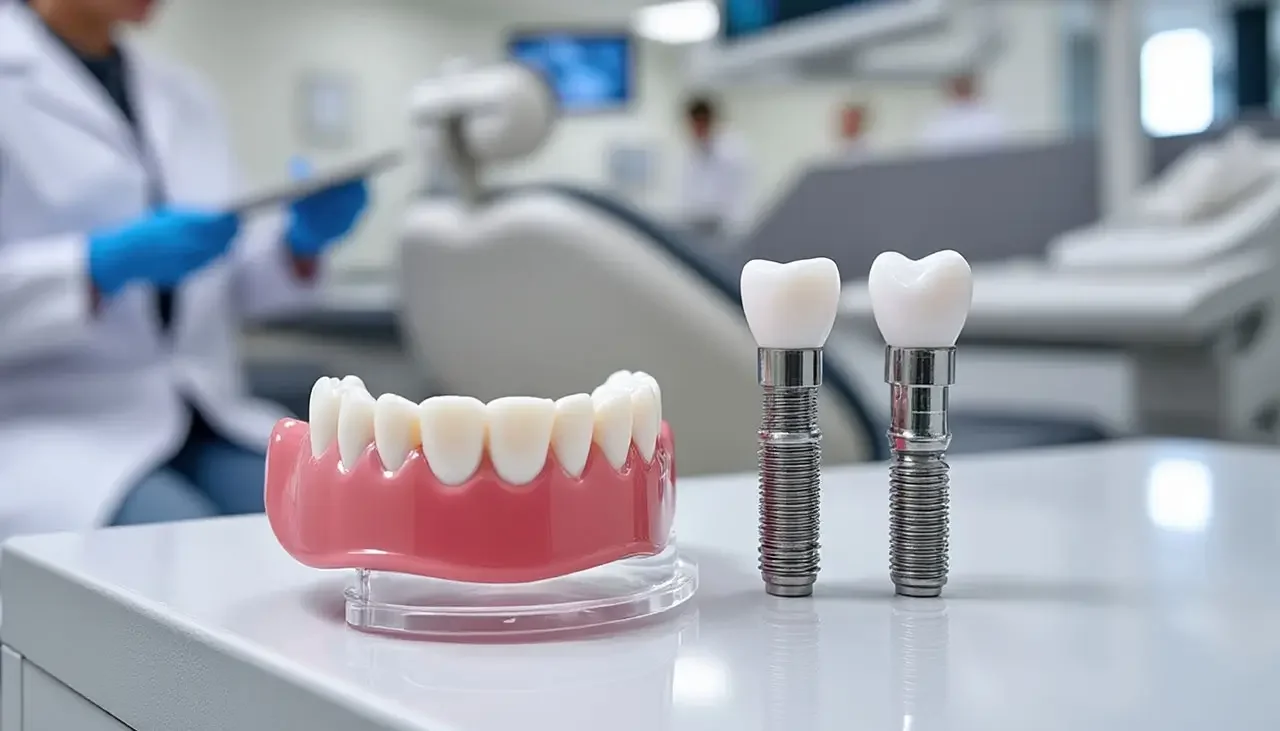
Custom dentures are removable prosthetic teeth designed and fabricated specifically for your mouth. Unlike one-size-fits-all alternatives, custom dentures are crafted from detailed impressions of your gums and jaw, resulting in a fit that is far more comfortable and natural-looking. They can replace a full arch of teeth (complete dentures) or fill in gaps left by several missing teeth (partial dentures).
Modern custom dentures use high-quality acrylic resins and porcelain that closely mimic the appearance of natural teeth and gum tissue. When properly fitted, they allow patients to eat a wide variety of foods, speak clearly, and smile with confidence. They're also a practical option for patients who may not be candidates for implant surgery due to bone loss, certain health conditions, or personal preference.
What Are Dental Implants?
Dental implants are titanium posts surgically placed into the jawbone to act as artificial tooth roots. Once the implant fuses with the bone — a process called osseointegration — a custom crown, bridge, or even an implant-supported denture is attached on top. The result is a restoration that looks, feels, and functions very much like a natural tooth.
Implants are considered the gold standard for tooth replacement because they stimulate the jawbone, helping to prevent the bone loss that typically follows tooth extraction. They are a long-term investment: with proper care, implants can last decades.
Comparing the Two: Key Factors to Consider
Comfort and Stability
Custom dentures rest on the gums and may require adhesive to stay in place. While a well-fitted set is far more stable than a generic alternative, some patients find that dentures shift slightly during eating or speaking — particularly as the jaw changes shape over time. Implants, by contrast, are anchored directly in the bone and do not move. Many patients describe implant-supported restorations as the closest thing to having their natural teeth back.
Bone Health
One often-overlooked consideration is what happens beneath the gumline. When a tooth root is missing, the jawbone in that area gradually resorbs, or shrinks. Implants mimic the stimulation that natural roots provide, slowing or preventing this process. Dentures do not stimulate the bone in the same way, which means the jaw may continue to change shape over time — sometimes requiring denture adjustments or relining to maintain a good fit.
Cost and Accessibility
Custom dentures are generally the more affordable upfront option, making them accessible to a broader range of patients. Dental implants involve a higher initial investment, though many patients find the long-term value compelling given their durability and lower maintenance needs. It's worth discussing payment options and any applicable dental benefits with the ESO Dental team, as financing plans can make implants more attainable. If cost is a concern, you may also find our upcoming post — Senior Dental Discounts Near Me: How to Save on Dental Care — a helpful resource.
Candidacy and Timeline
Not every patient is an immediate candidate for implants. Adequate bone density is required to support the implant post, and patients with certain systemic health conditions may need additional evaluation. The implant process also takes several months from placement to final restoration. Custom dentures, on the other hand, can typically be delivered in a shorter timeframe and require no surgery, making them a faster path to a restored smile for many patients.
Maintenance
Custom dentures are removed for cleaning and should be soaked overnight. Implants are cared for just like natural teeth — brushing, flossing, and regular professional cleanings. Neither option is maintenance-free, but the routines are quite different, and patient lifestyle plays a real role in which approach feels sustainable.
Can You Combine Both? Implant-Supported Dentures
For patients who want the stability of implants but need to replace a full arch of teeth, implant-supported dentures offer a compelling middle ground. A small number of implants are placed strategically in the jaw, and a custom denture snaps or locks onto them. This dramatically reduces movement and eliminates the need for adhesive, while typically costing less than replacing every tooth individually with a single implant. It's one of the most popular solutions for patients missing all or most of their teeth.
Making the Decision That's Right for You
There is no universally correct answer — only the answer that fits your oral health, your goals, and your life. A thorough examination, including X-rays to assess bone density and gum health, is the essential first step. The team at ESO Dental takes time to understand each patient's full picture before making any recommendation. Whether you're leaning toward custom dentures, exploring implants, or curious about implant-supported options, an honest conversation with your dentist is the best place to start.
You might also be interested in our posts on How Teeth Whitening Works: What to Expect at Your Appointment and Need an Emergency Dentist in Oakland? Here's What to Do for more guidance on caring for your smile at every stage.
Frequently Asked Questions
How long do custom dentures last?
With proper care, custom dentures typically last five to eight years before they may need to be relined or replaced. Because the jaw changes shape over time, periodic adjustments help maintain a comfortable, secure fit.
Are dental implants painful?
The implant procedure is performed under local anesthesia, so most patients experience little discomfort during the surgery itself. Some soreness and swelling in the days following placement is normal and manageable with over-the-counter pain relief. Most patients are pleasantly surprised by how straightforward the recovery is.
Can I get implants if I've already been wearing dentures?
In many cases, yes — though your dentist will need to evaluate your current bone density, since bone loss can occur over time with denture wear. If bone volume is insufficient, a bone grafting procedure may be recommended before implant placement. Your provider can walk you through what that process looks like.
Will my custom dentures look natural?
Modern custom dentures are designed to closely match the appearance of natural teeth and gum tissue. Because they are made from detailed impressions of your mouth, they fit your unique facial structure — contributing to a natural look and feel that generic, off-the-shelf options simply cannot replicate.
How do I know which option is right for me?
The best way to find out is through a personalized consultation. Your dentist will review your oral health history, take any necessary imaging, and discuss your priorities — from budget to lifestyle — before recommending a path forward. There's no pressure, just information.
Ready to explore your options? The team at ESO Dental is here to help you make a confident, informed decision about your smile. Visit us at 4040 Park Boulevard in Oakland, CA, call us at (510) 530-5530, or schedule a consultation online at ESO Dental today. We look forward to helping you find the solution that fits your life.
